

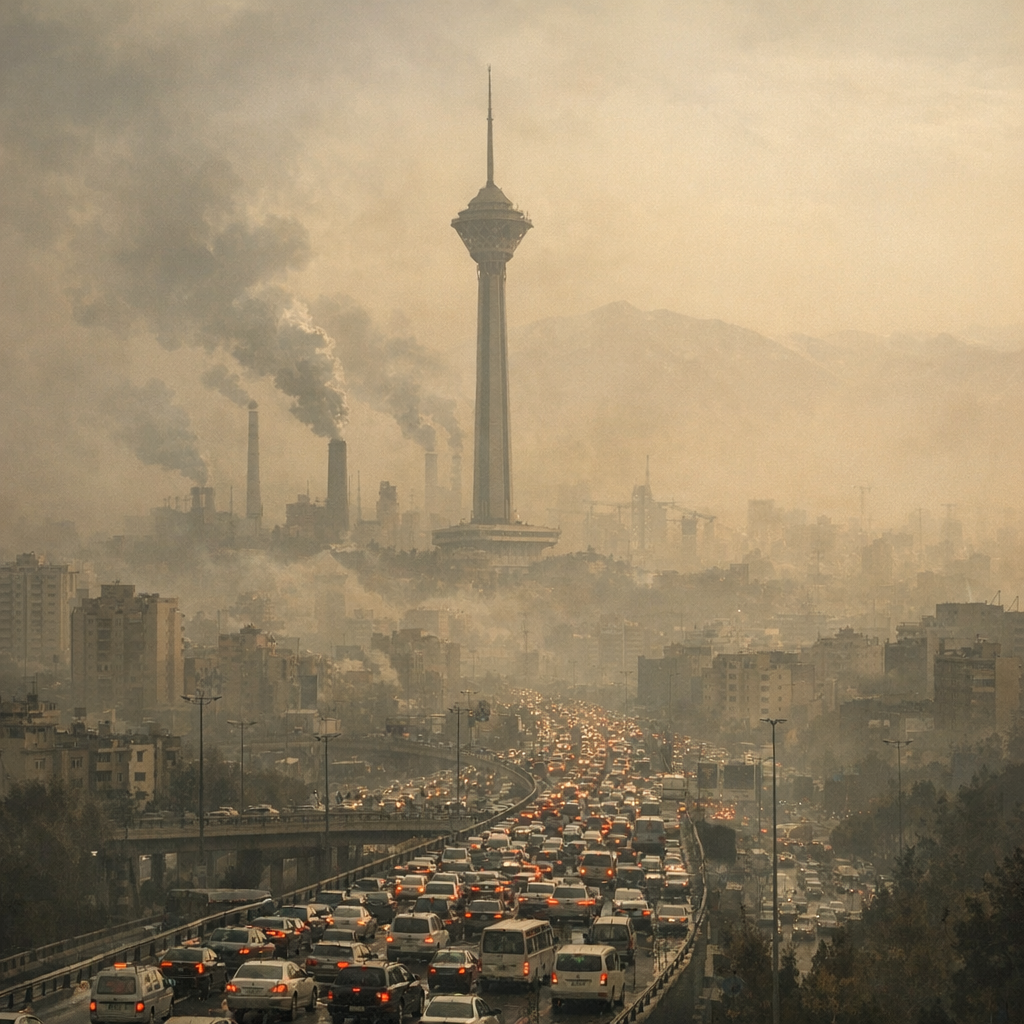
Tehran, Iran’s bustling capital, faces significant air pollution challenges that impact the health and well-being of its residents. Understanding the root causes is essential for developing effective solutions.
Primary Sources of Air Pollution
Vehicular Emissions
Approximately 70% of Tehran’s particulate matter emissions originate from mobile sources, primarily vehicles. The city hosts over 4.24 million vehicles, with cars constituting about 80% of this fleet. Many of these vehicles are aging and lack modern emission controls, contributing significantly to air pollution.
Industrial Activities
Industrial facilities, including refineries and power plants, account for around 20% of the city’s particulate matter emissions. These establishments often rely on fossil fuels, releasing pollutants into the atmosphere.
Geographical and Meteorological Factors
Tehran’s location in a basin surrounded by mountains can trap pollutants, especially during periods of low wind and temperature inversions, leading to poor air quality.
Potential Solutions
Improving Fuel Quality
Enhancing fuel standards to reduce sulfur content can decrease emissions from vehicles and industrial sources.
Modernizing the Vehicle Fleet
Phasing out older vehicles and promoting the use of newer, more efficient models can significantly reduce pollution levels.
Expanding Public Transportation
Investing in and encouraging the use of public transit can decrease the number of private vehicles on the road, leading to lower emissions.
Implementing Green Urban Planning
Increasing green spaces and implementing urban designs that promote better air circulation can help mitigate pollution.
Addressing Tehran’s air pollution requires a multifaceted approach, combining policy changes, technological advancements, and community engagement to create a healthier environment for all residents.