

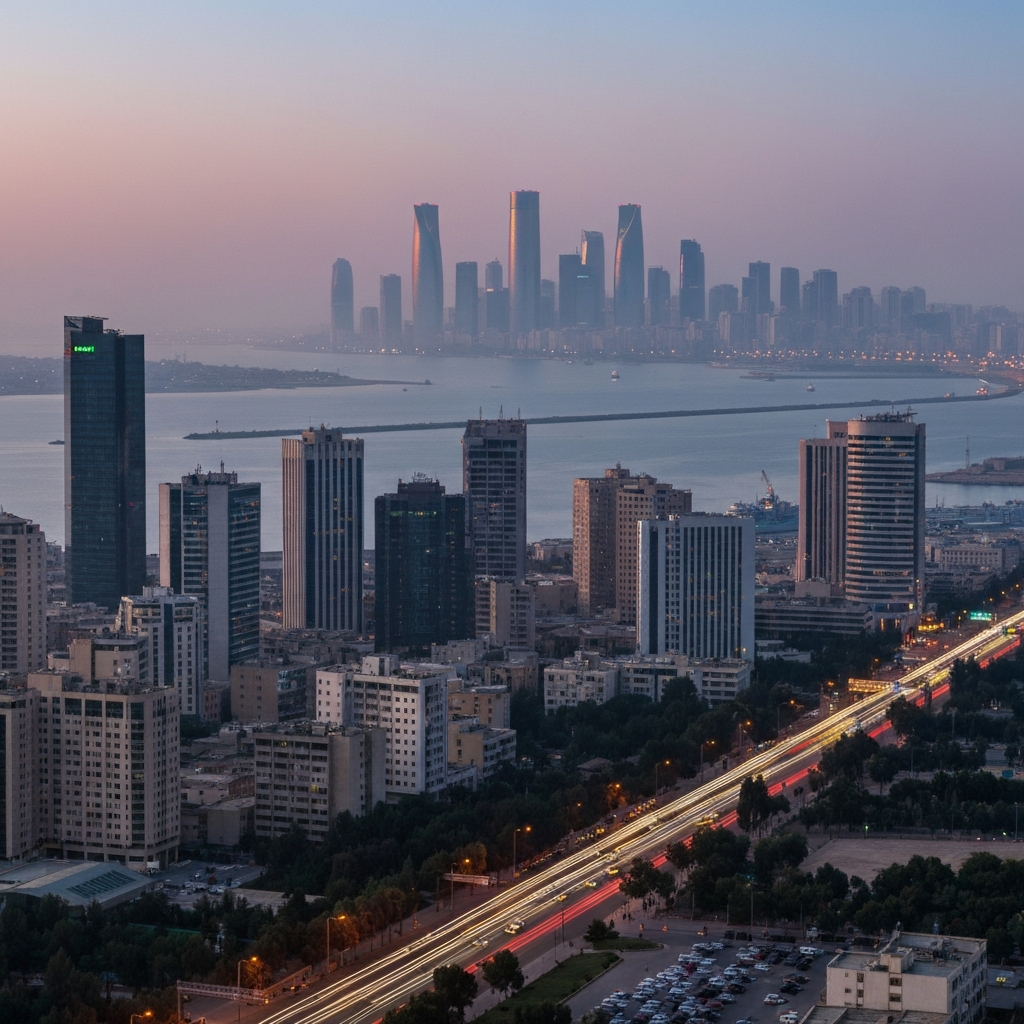
The relationship between the United States and Iran has been marked by decades of tension, with recent developments further complicating the landscape. As residents of Tehran, it’s crucial to understand these dynamics and their implications for our daily lives.
Historical Context
The roots of U.S.-Iran tensions trace back to the 1953 CIA-assisted coup that reinstated the Shah, leading to decades of Western-friendly policies. This period ended with the 1979 Islamic Revolution, which drastically altered the bilateral relationship. Over the years, events such as the Iran-Iraq War, the U.S. embassy hostage crisis, and disputes over Iran’s nuclear program have further strained relations.
Recent Developments
In recent months, the U.S. has intensified its economic pressure on Iran. A notable action includes the blockade in the Gulf of Oman, which, according to the U.S. Department of Defense, has resulted in approximately $4.8 billion in lost oil revenue for Iran since its implementation on April 13. This blockade aims to exert economic pressure during a pause in peace negotiations over ongoing conflicts. Over 40 vessels attempting to transport Iranian oil have been intercepted by the U.S. military. Despite these efforts, some tankers have evaded U.S. actions, indicating the challenges in enforcing such measures.
Economic Implications
The U.S. economy has also felt the repercussions of these tensions. In the first quarter of 2026, the U.S. economy grew at a 2% annual rate, rebounding from a sluggish 0.5% in the last quarter of 2025. This recovery was largely due to increased federal spending following a prolonged government shutdown. However, the conflict with Iran has introduced economic uncertainty, particularly with the blockade of the Strait of Hormuz, a critical global oil passage. This has led to intensified energy prices and inflation, affecting both nations and the global economy.
Looking Ahead
The current state of U.S.-Iran relations resembles a Cold War-like phase, characterized by financial sanctions, military blockades, and tentative diplomatic overtures. The prolonged stalemate has driven up global energy prices and elevated the risk of military conflict in the Persian Gulf. While some advisers propose intensifying economic pressure, others urge limited military strikes to shift the balance. Iran has proposed reopening the Strait of Hormuz in exchange for the lifting of the U.S. blockade, but no resolution is in sight.
As Tehran residents, staying informed about these developments is essential. Understanding the broader geopolitical landscape helps us navigate the challenges and uncertainties that arise from these complex international relations.