

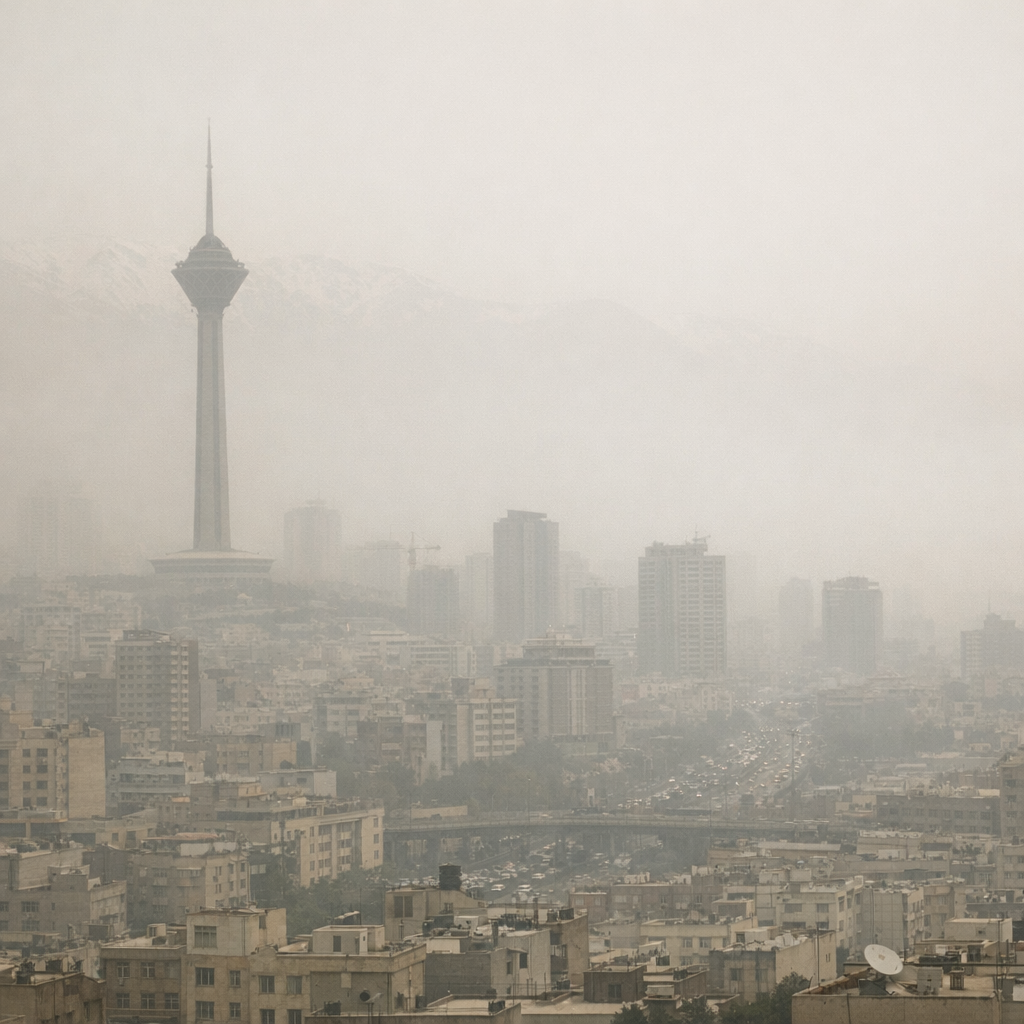
Tehran, our vibrant capital, is confronting several environmental challenges that impact the health and well-being of its residents. Key among these are air pollution, water scarcity, and the intensifying urban heat island effect.
Air Pollution
Air quality in Tehran has been a longstanding concern. A significant contributor to this issue is vehicular emissions. Reports indicate that motor vehicles are responsible for approximately 80% of the city’s air pollution. The prevalence of aging cars and motorcycles, which emit substantially more pollutants than newer models, exacerbates the situation. Additionally, the use of substandard fuels has led to increased sulfur content in diesel, further deteriorating air quality.
Water Scarcity
Water scarcity is another pressing issue. Tehran’s water consumption has risen sharply, from 346 million cubic meters per year in 1976 to about 1.2 billion cubic meters currently. This surge, coupled with a historic drought and mismanagement, has led to critically low levels in key reservoirs. The ongoing drought, now in its fifth consecutive year, reflects a broader trend of declining precipitation and worsening dry spells.
Urban Heat Island Effect
The urban heat island (UHI) effect is intensifying in Tehran. Studies project that by 2030, the mean nighttime surface UHI intensity could reach 5.96°C, a significant increase from historical levels. This trend is attributed to rapid urbanization, reduced vegetation cover, and climate change. The UHI effect not only elevates temperatures but also impacts thermal comfort and energy consumption.
Moving Forward
Addressing these environmental challenges requires a multifaceted approach. Enhancing public transportation and enforcing stricter vehicle emission standards can mitigate air pollution. Implementing water conservation measures and improving infrastructure can alleviate water scarcity. To combat the UHI effect, urban planning should prioritize green spaces and adopt heat-mitigating building materials.
As residents of Tehran, our collective efforts are crucial in fostering a sustainable and healthier environment for future generations.