

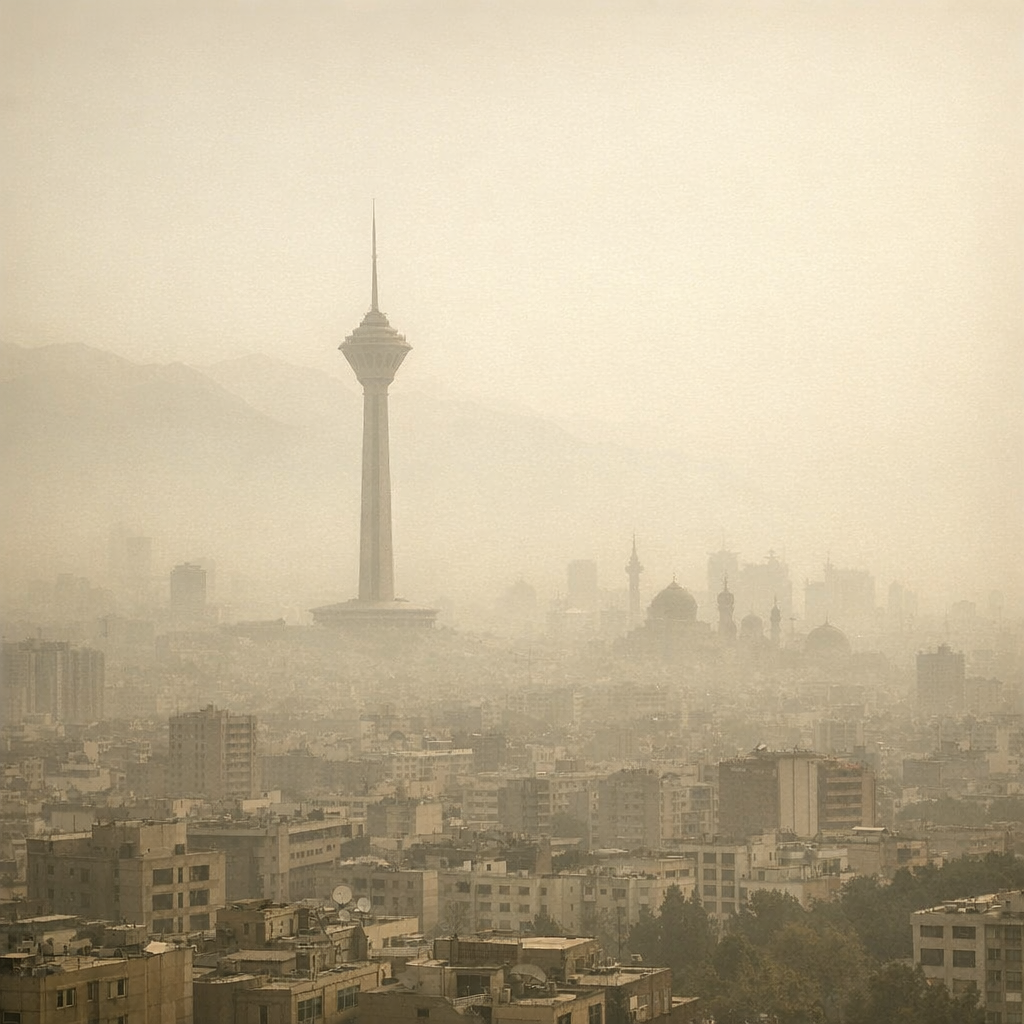
Tehran, Iran’s bustling capital, is grappling with a trio of environmental challenges that threaten the health and well-being of its residents: escalating air pollution, intensifying urban heat islands, and critical water shortages.
Air Pollution: A Persistent Threat
The city’s air quality has been a longstanding concern. Factors contributing to this issue include the widespread use of aging vehicles with substandard fuel efficiency, industrial emissions, and the city’s unique topography, which traps pollutants. These elements combine to produce significant levels of smoke and haze, adversely affecting public health.
Urban Heat Island Effect: Rising Temperatures
Recent studies have highlighted the intensification of the urban heat island effect in Tehran. The expansion of built-up areas and reduction in vegetation cover have led to increased temperatures within the city compared to its surrounding regions. This phenomenon not only exacerbates energy consumption but also poses health risks, particularly during the warmer months.
Water Scarcity: A Looming Crisis
Tehran is also facing a severe water crisis. The city has experienced a significant decrease in rainfall, leading to critically low levels in major dams that supply water to the capital. This situation has prompted discussions about potential water rationing and even the possibility of relocating the capital to areas with more sustainable water resources.
Addressing these environmental challenges requires a multifaceted approach, including policy reforms, infrastructure improvements, and community engagement to ensure a sustainable future for Tehran and its residents.