

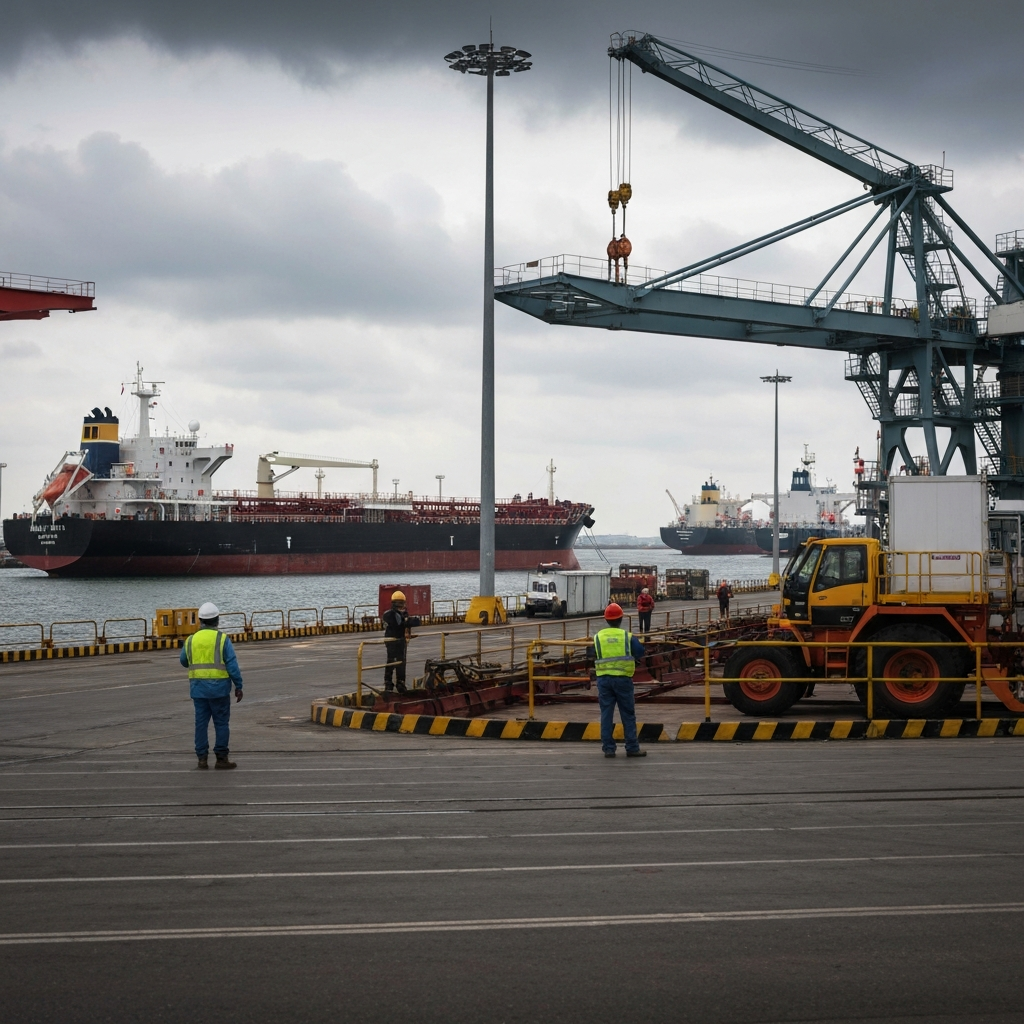
The ongoing conflict in Iran has significantly disrupted global energy markets, leading to economic challenges worldwide. The closure of the Strait of Hormuz, a critical passage for oil shipments, has caused a sharp increase in oil prices, affecting both developed and developing economies.
Impact on Global Energy Markets
The Strait of Hormuz is a vital chokepoint through which a substantial portion of the world’s oil supply passes. The conflict has led to its closure, resulting in a significant reduction in oil shipments. This disruption has caused oil prices to surge, with Brent crude prices increasing by 39% as of March 12, 2026. Such a sharp rise in energy costs has had a cascading effect on global economies, leading to increased inflation and economic slowdowns. []
Effects on Global Supply Chains
Beyond energy markets, the conflict has also impacted global supply chains. A notable example is the Iranian strike on Saudi Arabia’s Jubail petrochemical complex, which produces approximately 70% of the world’s high-purity polyphenylene ether (PPE) resin, a key material in printed circuit boards (PCBs). This attack has led to immediate shortages and escalating costs in the electronics sector, already strained by chip shortages and rising prices. []
Broader Economic Consequences
The International Monetary Fund (IMF) has warned that the conflict has significantly disrupted global economic momentum and spurred inflation. The IMF’s latest World Economic Outlook reports a global growth forecast cut to 3.1%, down from 3.4% in 2025, due to the conflict’s economic repercussions, including oil market disruptions. []
Regional Impacts
While the global economy faces challenges, certain regions are more vulnerable. Asia, heavily reliant on Middle Eastern oil, is particularly affected by the energy supply disruptions. Europe also faces significant exposure due to its energy dependencies. The longer the conflict persists, the greater the potential economic damage to these regions. []
Conclusion
The conflict in Iran has far-reaching implications for the global economy. From soaring energy prices to disrupted supply chains and increased inflation, the effects are widespread. As the situation continues to evolve, it is crucial for policymakers and businesses to monitor developments closely and adapt to the changing economic landscape.